Know Your Enemy. Well… Kinda.
By Adam, Founder, LawnJobOS · 2026-08-17 · 8 min read · Insights
A slightly unfair but surprisingly useful field guide to Boomers, Gen X, Millennials, Gen Z and the one business lesson that matters: your customer is not you.
Know Your Enemy
A completely unfair—and surprisingly useful—field guide to the generations you're trying to sell to.
I have always said that somewhere on the evolutionary chain, I am closely related to a Labrador retriever.
I'm basically sitting by the window waiting for somebody to come outside and play.
That's how I've approached people for most of my life, and probably business too. Call me. Drop by. Ask me something. Tell me what you're thinking. Let's figure the damn thing out.
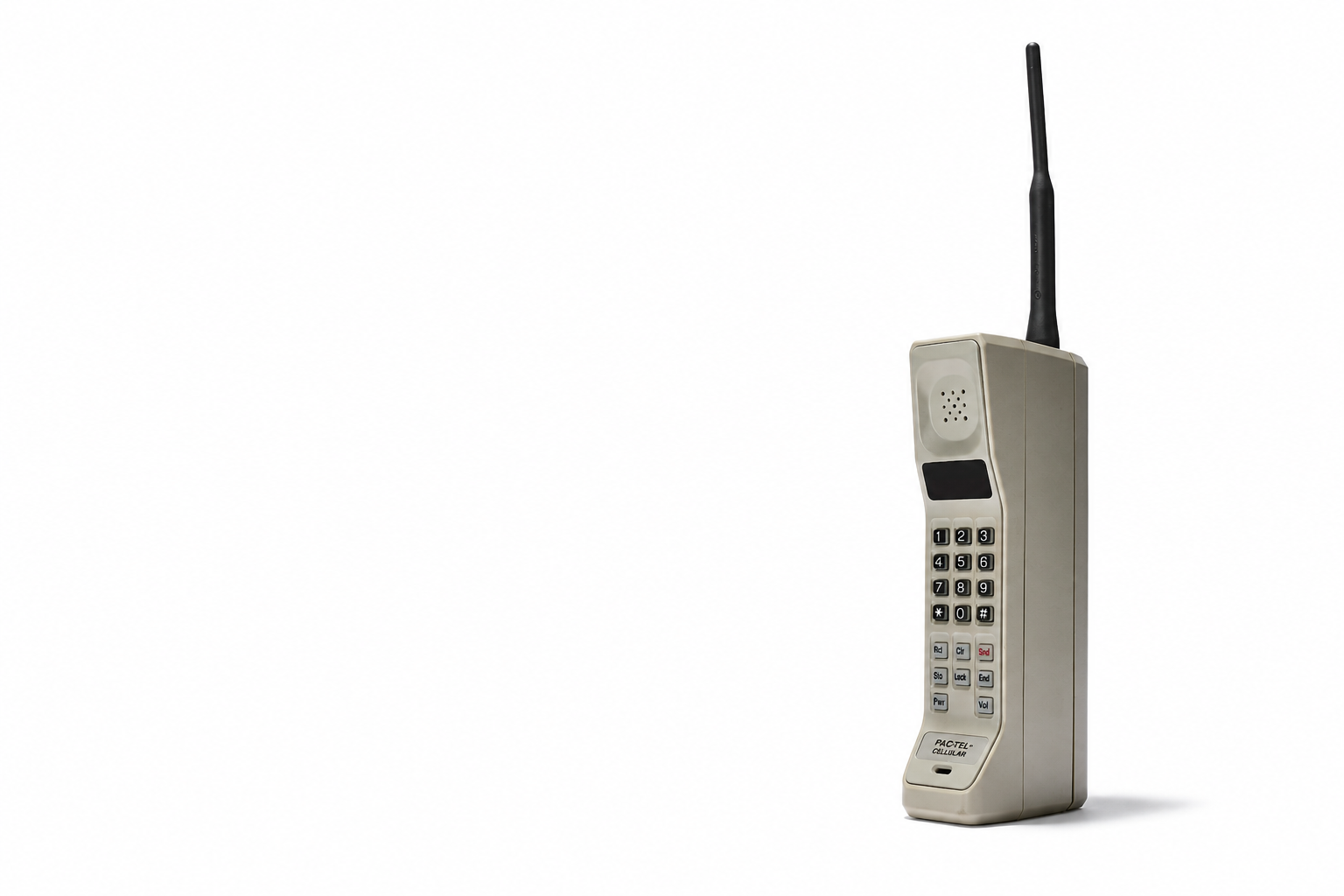
Which brings me to the telephone.
I'm a caller.
If I have something that would take twelve texts and three opportunities for somebody to misunderstand me, I'll just call. To me, this is efficient. Friendly, even.
Apparently, to a growing portion of society, it is an act of aggression.
I'll call someone. They won't answer.
Fine.
Then, a few minutes later, my phone lights up:
"Hey… you called?"
Yes.
Yes, I did.
That's what the missed call was trying to tell you.
I come from a distant civilization where a telephone would ring in an empty house, a machine would answer it, somebody would leave a message, and eventually another human being would call them back.
We had an entire system.
It worked.
That civilization is gone.
And if you're running a business today, getting angry about it isn't going to make you any money.
Welcome to Know Your Enemy.
Not your competitor.
Your customer.
First, Your Customer Is Not You
That's the entire lesson, really.
You may love talking on the phone. Your customer may treat an unexpected call like you've thrown a brick through their kitchen window.
You may think Instagram is ridiculous. Your next customer may use it as a search engine.
You may meticulously type a three-paragraph email explaining everything. Your customer may look at the length, decide they'll deal with it later and disappear into the mist forever.
None of you are necessarily wrong.
You simply grew up with different definitions of what normal communication looks like.
And while generational labels are imperfect—human beings stubbornly refuse to organize themselves into tidy marketing columns—they can give us some useful context.
So grab your helmet.
Let's meet the troops.
Baby Boomers
Born roughly 1946–1964
Boomers came of age when the telephone was attached to the house.
Think about that.
You didn't call Steve.
You called Steve's entire family.
There was a reasonable chance Steve's father would answer, and now you had an unexpected job interview before being permitted to speak to Steve.
Business communication was similarly direct. Phone calls. Face-to-face conversations. Paper invoices. Handshakes. People knew the name of the person at the bank.
Then came answering machines, email, websites, smartphones, online banking and social media—and contrary to the lazy stereotype, Boomers didn't simply throw their hands in the air and refuse to participate.
They adapted.
The mistake for a modern service business is assuming an older customer automatically wants everything done offline.
What they often want is clarity and confidence.
Who are you?
What do you do?
How much does it cost?
How do I reach you if something goes sideways?
A slick digital experience is perfectly useful. A slick digital experience that makes it impossible to figure out whether there's an actual business behind it is less charming.
The business lesson:
Don't confuse digital convenience with human disappearance.
Make your information obvious. Make your reputation easy to verify. Give customers a straightforward path to book—but don't hide every possible human contact method behind seventeen FAQs and a chatbot named Trevor.
Some people still want to call.
God bless them.
Generation X
Born roughly 1965–1980
Ah, my people.
The transitional species.
Gen X remembers a world before the internet and also remembers exactly where they were when the internet started making that weird dial-up noise.
We had landlines.
We had answering machines.
We had phone books thick enough to stun a burglar.
We printed directions from MapQuest and drove around holding six sheets of paper while trying not to die.
Then, somehow, we became the people resetting everybody else's Wi-Fi.
Gen X is interesting for businesses because this generation spent roughly half its life watching technology replace things it already knew how to do.
We remember banking before banking apps.
Shopping before Amazon.
Dating before swiping.
Calling a restaurant and actually speaking to a person to make a reservation.
So technology isn't magical to us.
It's a tool.
And when the tool takes longer than doing the damn thing the old way, we become irritated.
This is also why some of us still call.
A two-minute conversation seems vastly more efficient than twenty-eight messages.
Unfortunately, the person on the other end may regard those two minutes as a hostage situation.
The business lesson:
Give Gen X options without bullshit.
Let us book online.
Let us read the reviews.
Let us figure things out ourselves.
But if something gets complicated, putting a phone number somewhere won't kill you.
We survived dial-up internet.
We've suffered enough.
Millennials
Born roughly 1981–1996
Ah yes.
The generation everybody blamed for killing everything.
Department stores.
Napkins.
Cable television.
Home ownership.
Probably mayonnaise at some point.
Millennials are especially important to understand because they're not digital natives in quite the same way as younger Gen Z customers.
Many remember the transition.
They remember desktop computers, MSN Messenger, early Facebook, terrible digital cameras and a time when getting on the internet meant nobody else in the house could use the phone.
But they entered adulthood as smartphones, online reviews, social media and digital commerce became normal.
That matters.
For a Millennial customer, researching a business online isn't necessarily a special step.
It is the step.
Who are you?
What do people say about you?
Can I see your work?
Can I understand your pricing?
Can I book this without arranging a telephone summit?
Can I do all of this while sitting on the couch at 10:47 p.m.?
Good.
Millennials helped normalize the expectation that businesses should be available even when the owner isn't.
Not physically available.
Digitally available.
The business lesson:
Your online presence isn't your brochure anymore.
It's part of your storefront.
Reviews matter.
Convenience matters.
Mobile matters.
Being able to investigate you without introducing themselves first matters.
The customer may spend fifteen minutes with your business before you even know they exist.
Make those fifteen minutes count.
Generation Z
Born from roughly 1997 onward
Now things get interesting.
Gen Z didn't simply adopt social media.
For many of them, social media was already part of the environment.
There wasn't a dramatic moment where the world suddenly became connected.
It just… was.
And that's beginning to change something much bigger than communication.
It's changing discovery.
A younger customer may not begin with your website.
They may discover the business through a video.
A post.
A recommendation.
A creator.
A comment.
A friend sharing something.
A search inside a social platform.
The old business funnel was wonderfully neat:
Search → Website → Contact → Buy.
The modern version can look more like:
See → Scroll → Forget → See again → Follow → Check reviews → Watch video → Send to friend → Come back three days later → Book.
Good luck putting that neatly into your 2007 marketing funnel PowerPoint.
This is also where the unexpected phone call becomes particularly interesting.
Calling assumes:
I am available now, therefore you should also be available now.
Messaging doesn't.
The recipient gets to decide when the conversation begins.
Once you look at it that way, younger customers aren't necessarily antisocial.
They may simply have a different understanding of control over communication.
The business lesson:
Stop thinking of social media as the place where the marketing department posts a Christmas graphic once a year.
For younger customers, social can be part of how they investigate whether you are real.
Show the work.
Show the business.
Show some personality.
Make it easy to share.
Make the next step obvious.
And for the love of God, make the next step work on a phone.
Generation Alpha
Born somewhere around the early 2010s onward, depending on whose generational ruler you're using.
Most aren't your customers yet.
So we have some time.
But these are children growing up with touchscreens, streaming, AI assistants, voice interfaces, algorithms and instant access to information as completely ordinary parts of life.
What will they consider unnecessarily complicated when they're adults?
Typing?
Websites?
Downloading apps?
Waiting four seconds?
Having to explain what they want twice?
Who the hell knows.
If history is any indication, the rest of us will complain about it while quietly adapting six months later.
Here's Where Generational Marketing Usually Goes Off the Rails
This is the point where bad marketing articles turn human beings into zoo exhibits.
Boomers like phone calls.
Gen X likes email.
Millennials like texts.
Gen Z communicates exclusively through interpretive TikTok dances.
No.
A generation is not a personality type.
A 68-year-old photographer running her business from an iPhone may be far more digitally sophisticated than a 27-year-old carpenter who wants customers to phone him.
Industry matters.
Personality matters.
Geography matters.
Income matters.
Culture matters.
The individual matters.
Generational context simply helps explain what technologies and behaviours were normal while someone was growing up.
Use it as a clue.
Not a diagnosis.
Know Your Enemy
The phrase is famously associated with The Art of War, written more than two thousand years before Rage Against the Machine plugged in a guitar.
The larger idea has survived because it's useful:
Understand who you're dealing with.
But in business, I'd change it slightly.
Know your customer.
More importantly:
Know that you are not your customer.
That's the dangerous assumption.
Business owners naturally build around themselves.
"I would call."
"I would never book someone from Instagram."
"I don't read reviews."
"I hate chat."
"I want to talk to somebody first."
That's nice.
You're not buying from you.
Your job isn't to train customers to communicate the way you prefer.
Your job is to remove as much unnecessary friction as possible between “I'm interested” and “done.”
Build for More Than One Generation
That's part of the thinking behind LawnJobOS.
A modern service business shouldn't have to choose between being social and being professional.
Customers should be able to discover the business, look through its work, follow it, share it, understand what it offers and book when they're ready.
The person who loves social media can discover you socially.
The person who wants to research quietly can browse.
The person ready to book can book.
The existing customer can stay connected.
And yes, if your business wants the telephone ringing, you can still answer the damn telephone.
Technology shouldn't force every customer into one behaviour.
It should give more of them a comfortable path to becoming your customer.
That's where service businesses are heading.
Not toward one generation's preferred way of doing things.
Toward choice.
So know your Boomers.
Know your Gen Xers.
Know your Millennials.
Know your Gen Zs.
Keep one eye on those Alpha kids because they're coming.
But above all:
Know your customer.
Sun Tzu probably would have approved.
Rage Against the Machine?
Maybe not.
About the editor
Adam is the founder of LawnJobOS, a Social Booking Platform built for service businesses. A lifelong entrepreneur, he writes about customers, technology and the strange realities of running a business in a world that keeps changing faster than the people running them.